
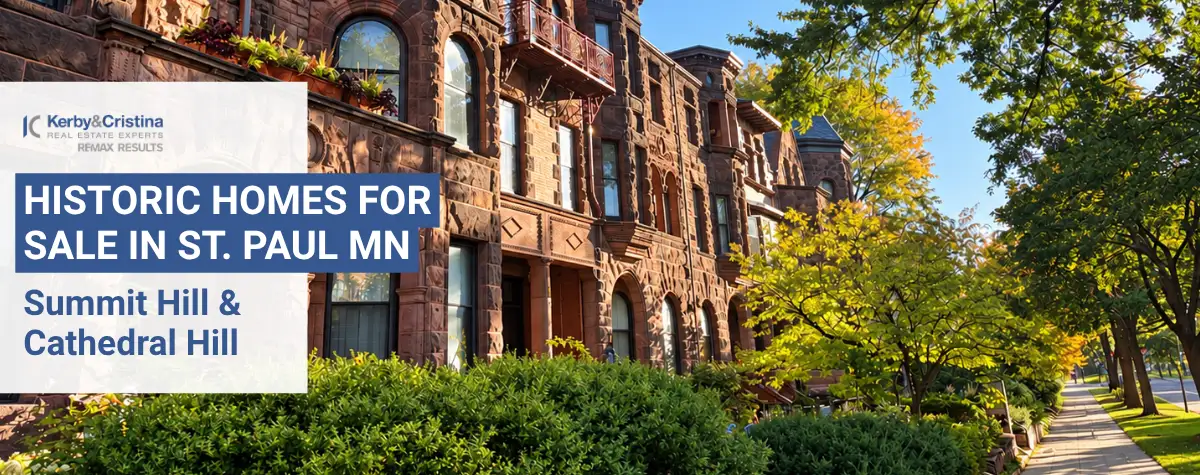
The best place to find historic homes for sale in St. Paul MN is along Summit Avenue, in the Summit Hill and Cathedral Hill neighborhoods. These areas hold the city’s densest collection of Victorian mansions, brownstones, and early 1900s homes, many inside protected heritage preservation districts.
Buying here means owning a piece of Minnesota history, steps from landmarks like the Minnesota Governor’s Residence and the James J. Hill House. It also means planning for design review rules, older home systems, and a competitive luxury market.
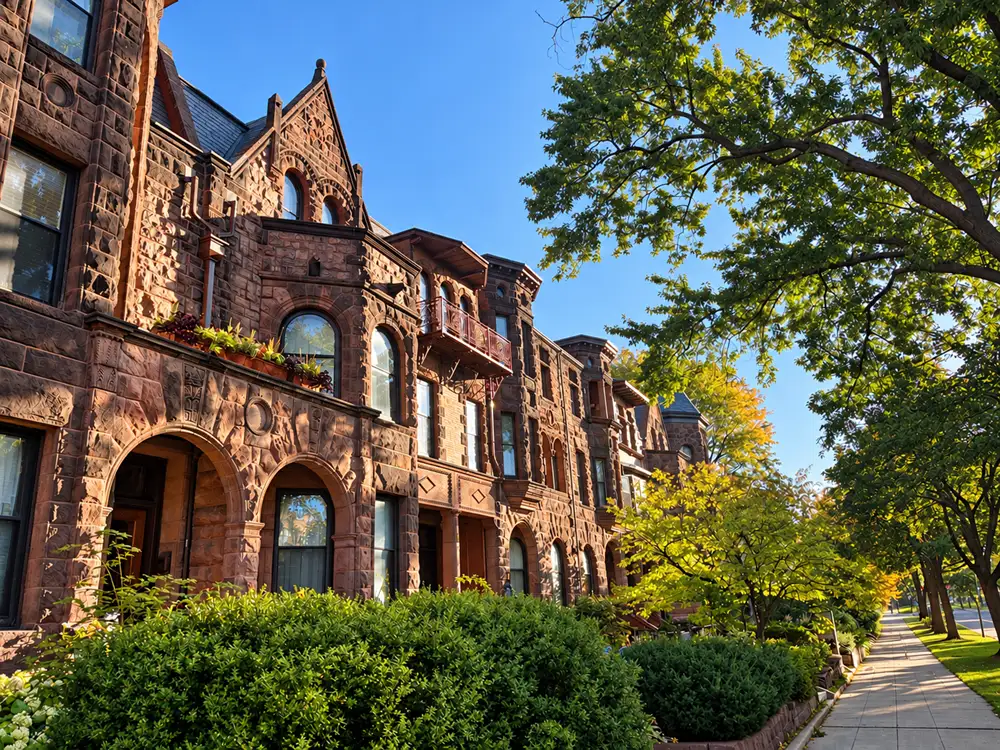
Summit Avenue is famous because it holds the longest preserved stretch of Victorian-era homes in the United States. Of the roughly 440 homes originally built along its 4.5 miles, 373 still stand today, according to Visit Saint Paul.
The avenue runs from the Cathedral of Saint Paul west toward the Mississippi River. The American Planning Association has named it one of the 10 Great Streets in America.
Three landmarks define the character of historic houses on Summit Avenue:
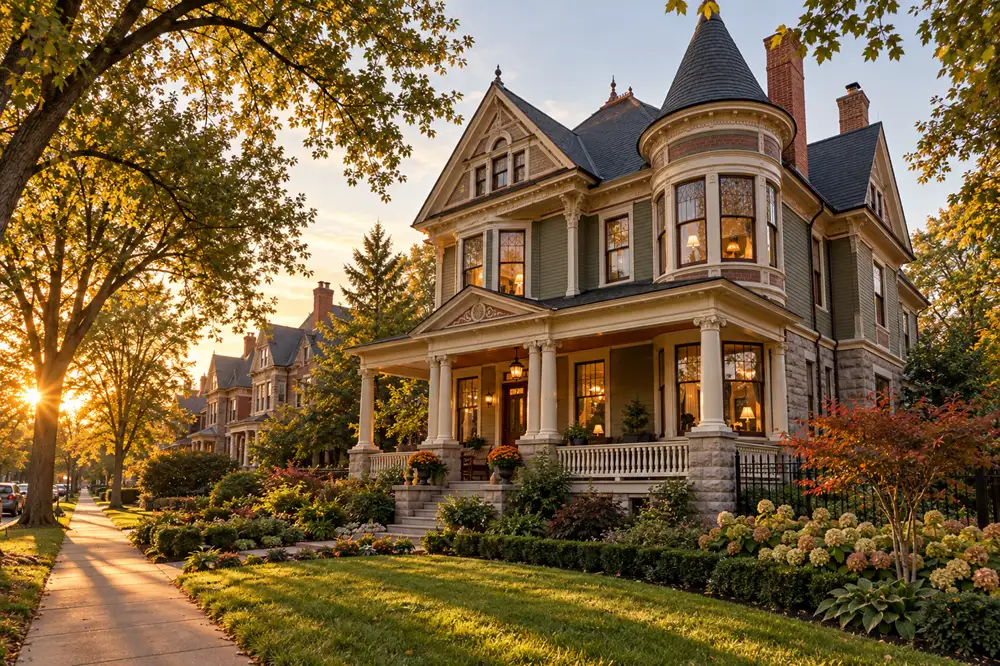
Victorian homes in St. Paul MN span several late 1800s and early 1900s styles. Common examples include:
Summit Hill is a quieter, more residential neighborhood centered on Summit and Grand Avenues, while Cathedral Hill is a denser, more urban pocket near downtown centered on Selby Avenue. Both offer historic homes for sale in St. Paul MN, but the lifestyle and housing mix differ.
Cathedral Hill is the popular name for the Ramsey Hill neighborhood, part of the larger Summit-University planning district, taken from its proximity to the Cathedral of Saint Paul.
| Feature | Summit Hill | Cathedral Hill |
|---|---|---|
| Main streets | Summit Avenue, Grand Avenue | Summit Avenue (east end), Selby Avenue |
| Housing mix | Large single-family homes, mansions, early 1900s brick apartments | Victorian homes, brownstones, row houses, condos |
| Nearby landmarks | Minnesota Governor’s Residence | Cathedral of Saint Paul, James J. Hill House |
| Feel | Residential, tree-lined, walkable to Grand Avenue shops | Urban, close to downtown, restaurant and boutique scene |
| Typical buyer | Buyers wanting space and a classic family home | Buyers wanting walkability and a lower-maintenance option |
| Median sale price (12 months through Sept 2026) | $582,450 | $325,500 (Summit-University) |
Buyers in Summit Hill tend to want a larger historic home with a yard and a strong neighborhood feel. Grand Avenue, its main commercial street, is lined with shops, restaurants, and cafes.
Buyers in Cathedral Hill often want history with an urban lifestyle. Condos inside converted brownstones and historic buildings give Cathedral Hill St. Paul real estate a wider entry point than the mansion blocks of Summit Avenue.
Buying St. Paul historic district homes means most exterior changes need approval from the city’s Heritage Preservation Commission (HPC) before a permit is issued. Interior updates are generally yours to make, but visible exterior work is reviewed against the district’s design guidelines.
Summit Avenue sits within two National Register historic districts, the Historic Hill District and the West Summit Avenue Historic District, plus city-designated heritage preservation districts (Summit Avenue overview).
A heritage preservation district is a city-designated area where St. Paul Legislative Code Chapters 73 and 74 govern exterior alterations, new construction, and demolition. The goal is to protect the historic character of the streetscape, not to freeze a home in time.
City HPC staff reports show the commission reviews exterior work on designated properties, with painting generally excepted (City of Saint Paul). Projects that commonly require review include:
Skipping review carries real risk. In one documented case, an owner on Summit Avenue removed historic sandstone entry steps without HPC approval or a permit, and the city found the work violated district guidelines (City of Saint Paul).
Ask for the property’s HPC file and permit history before you write an offer. Confirm whether past exterior work was approved, and build your renovation plans around the district guidelines from the start.
Buying a historic home in St. Paul follows the same path as any purchase, with extra diligence on inspections, preservation rules, and long-term maintenance costs. Follow these seven steps:
The biggest hidden costs in historic homes in St. Paul MN are usually systems and materials, not cosmetics. Plan for:
If you are weighing timing, our article on whether to wait for mortgage rates to drop breaks down what waiting has cost Twin Cities buyers.
Living near Summit Avenue means daily access to some of the most historic neighborhoods in St. Paul MN, with walkable shopping, dining, and landmarks right outside your door. Few places in the Twin Cities pair architecture this significant with this much everyday convenience.
The market for Summit Avenue St. Paul real estate is defined by limited inventory, since the historic housing stock is largely fixed. Here is the latest rolling 12-month data, as of October 2, 2026:
The two neighborhoods are moving in opposite directions. Summit Hill’s median climbed from about $450,000 in early 2023 to a peak near $710,000 in early 2026, then eased to $582,450 by September, which may create openings for buyers. Summit-University held near $300,000 through 2025 before rising to $325,500, its highest point since 2023.
For broader context, read what today’s Twin Cities market means for buyers at every price point.
Autumn is an especially good time to tour the area, when Summit Avenue’s canopy turns. Pair a home tour with ideas from our best fall activities around the Twin Cities.
The best historic homes for sale in St. Paul MN are found along Summit Avenue in Summit Hill and Cathedral Hill, where Victorian mansions, brownstones, and landmarks like the Minnesota Governor’s Residence define the streetscape. Smart buyers plan for preservation review, specialized inspections, and long-term maintenance before they make an offer.
Whether you want a Summit Avenue mansion or a Cathedral Hill brownstone condo, our team can help you find the right fit and buy with confidence.
Explore our luxury services for historic and high-end properties
Fill out our home buyer questionnaire to share what you are looking for
Contact Kerby & Cristina or call 763-634-0073 to schedule a consultation
Summit Hill and Cathedral Hill are the best-known historic neighborhoods in St. Paul MN, both anchored by Summit Avenue. Summit Avenue holds the longest preserved stretch of Victorian-era homes in the country.
Yes, but most exterior changes in a heritage preservation district need Heritage Preservation Commission review before a permit is issued. Interior renovations are generally not subject to HPC review.
Yes. The Minnesota Governor’s Residence is at 1006 Summit Avenue in the Summit Hill neighborhood. It was built from 1910 to 1912 and donated to the state in 1965.
Yes. Cathedral Hill is the popular name for the Ramsey Hill neighborhood, named for the nearby Cathedral of Saint Paul.
Prices for historic homes for sale in St. Paul range widely, from condos in converted brownstones to multimillion-dollar Summit Avenue mansions. In the 12 months through September 2026, the median sale price was $582,450 in Summit Hill and $325,500 in Summit-University, the district that includes Cathedral Hill.