
If you have been half-watching the housing market from the sidelines, you have probably noticed the headlines do not agree with each other. One says prices are still climbing. Another says buyers finally have leverage. Both are true, and that is exactly what makes right now such an interesting moment to buy in the Twin Cities.
The truth is that this market is not one market. It is several, layered on top of each other by price point, and what it means for you depends heavily on where you are shopping. Here is what the latest data actually shows, and what it means whether you are buying your first condo or your forever home.
According to the Minneapolis Area Association of Realtors, Twin Cities inventory climbed 6.7 percent year over year in July, bringing months’ supply up to 3.0 months. New listings rose 8.0 percent and closed sales jumped 10.5 percent compared to last July. Homes are also sitting on the market slightly longer, an average of 40 days, while sellers accepted 99.1 percent of list price on average, a touch lower than a year ago.
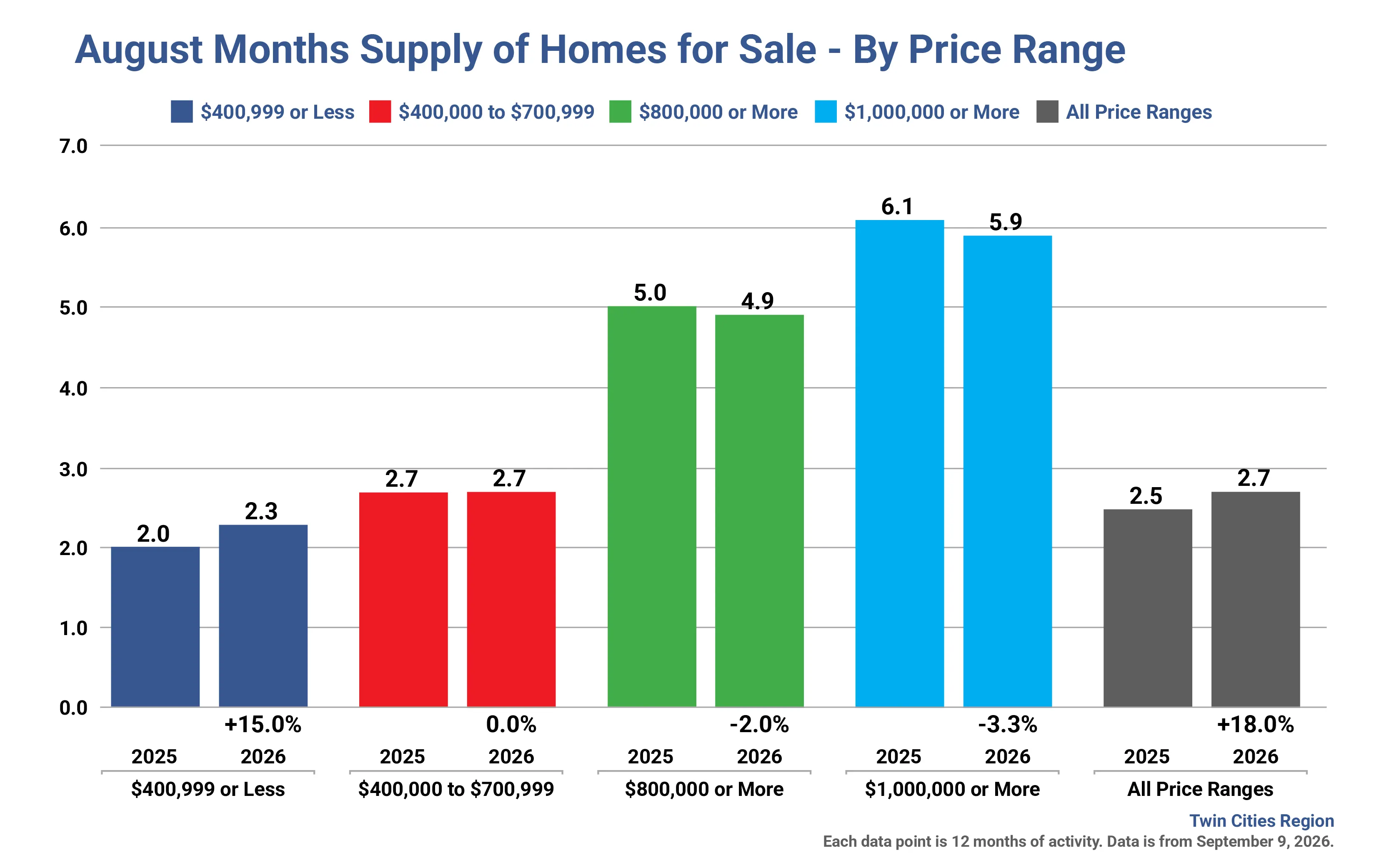
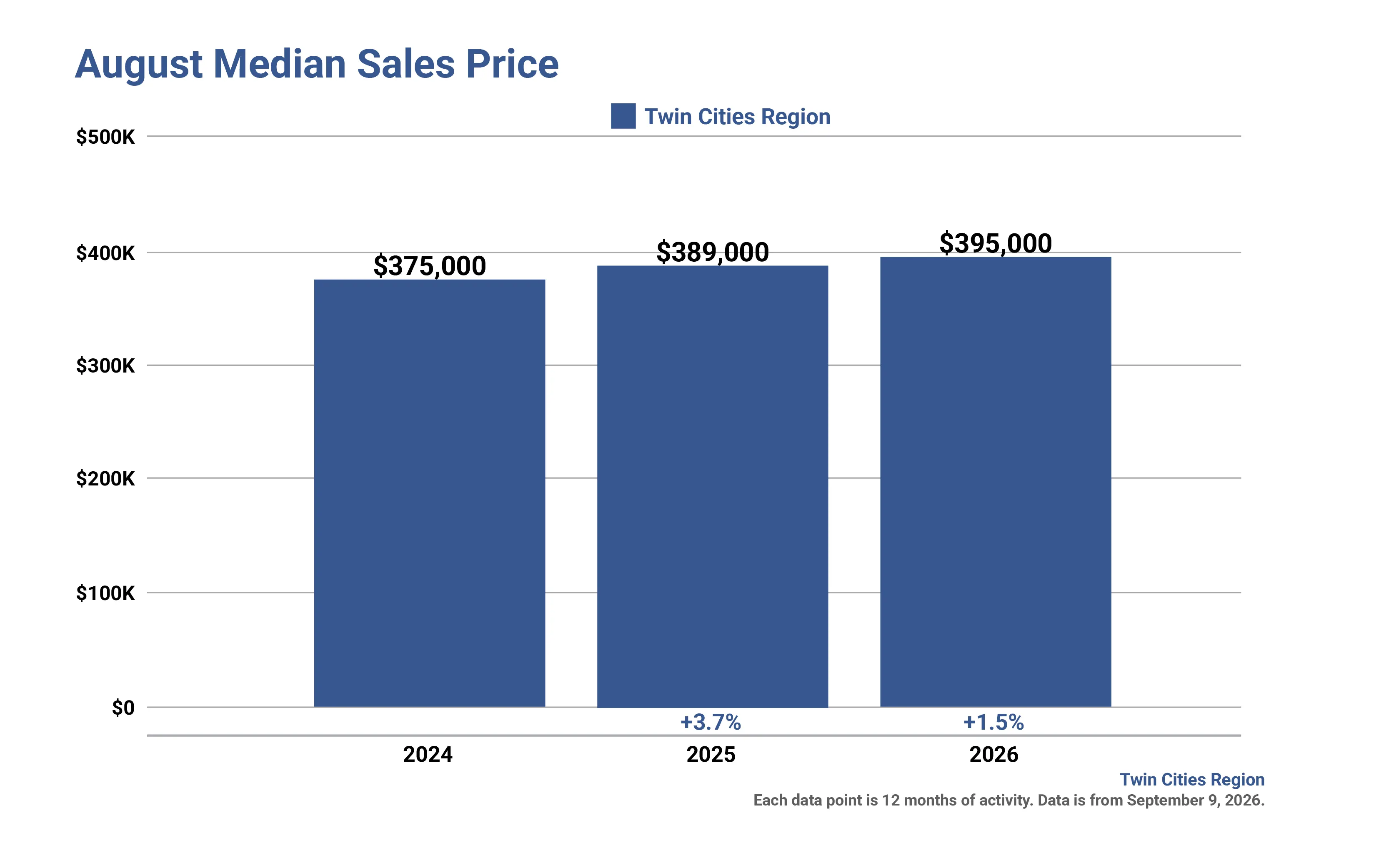
None of that spells a buyer’s market in the traditional sense. Three months of supply still favors sellers, and the median sales price rose 3.3 percent to $408,000. But the direction is unmistakable. Buyers today have more homes to choose from, more time to make decisions, and more room to negotiate than they have had in years. As Minneapolis Area Realtors president Aarica Coleman put it, conditions are shifting toward balance gradually, and that shift looks different depending on price point and property type.
That last part is the key to understanding your own situation. Statewide data shows pending sales under $400,000 grew a modest 3.7 percent, while sales over $1 million surged 18.0 percent. Condo sales climbed 10.2 percent, well ahead of single-family homes at 3.8 percent. Those are not small differences. They mean an entry-level buyer and a luxury buyer are functionally shopping in two different markets this summer.
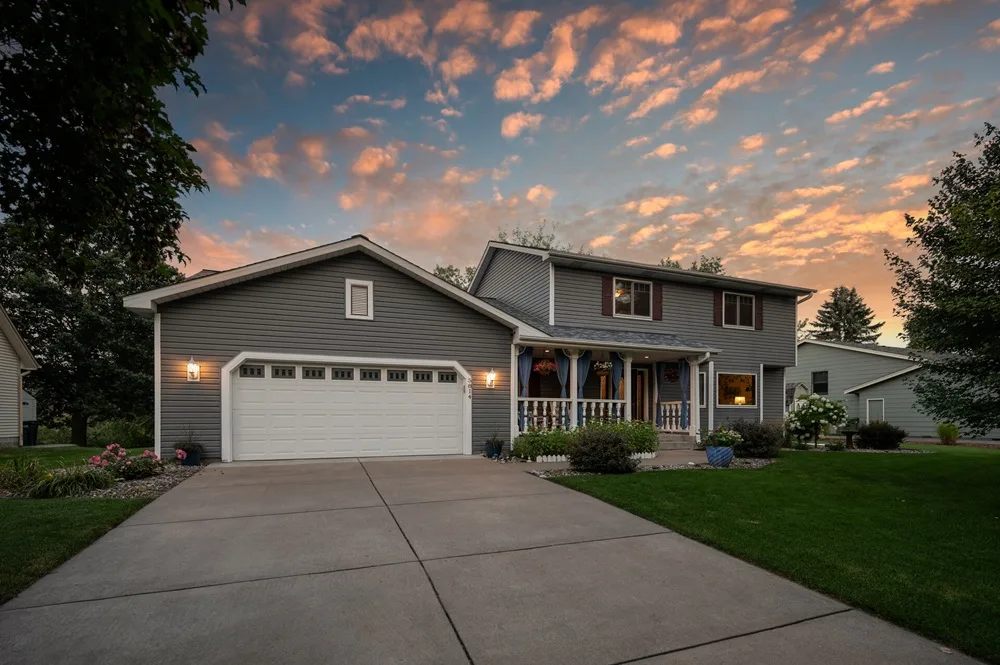
This is still the most competitive corner of the Twin Cities market. Demand at this price point has stayed steady even as rates hover near 6.7 percent, largely because renting has not gotten any cheaper and first-time buyers are not willing to wait indefinitely for rates to drop. Condos and townhomes in this range are seeing some of the strongest year-over-year sales growth in the entire market.
If you are shopping in this range, expect well-priced, move-in ready homes to still generate real competition, particularly in the first two weeks on the market. The good news is that rising overall inventory means you are less likely to be choosing between two mediocre options out of desperation. You have more listings to compare, which means more room to be selective about condition, location, and true fit rather than settling because nothing else is available.
Our advice here has not changed much: get fully underwritten before you start touring, know your top three non-negotiables, and be ready to move within days, not weeks, when the right home appears. We covered exactly how to structure a winning first offer in House Hunting? Here’s Why Your First Offer Matters, and it is especially relevant if you are competing for entry-level inventory right now.
This is where the Twin Cities market feels most balanced, and honestly, most livable for buyers right now. This band captures a huge share of move-up buyers, growing families, and people relocating into the metro, and it is benefiting the most from rising new listings. You are more likely to see price reductions here, more likely to negotiate closing cost credits, and more likely to get an inspection response taken seriously.
That does not mean it is a free-for-all. Well-staged homes in strong school districts or walkable suburbs are still moving quickly, and multiple offer situations have not disappeared, they have just become less universal. If you are searching in this range, it is worth reading our breakdown of How to Win in Multiple Offers, because when competition does show up in this band, it tends to be sharper, not softer.
This is also the range where new construction becomes a realistic option for a lot of buyers, and builders are more willing to negotiate incentives than they were a couple of years ago. If that is on your radar, our guide to Navigating New Construction Homes in the Twin Cities walks through where that negotiating room actually exists.
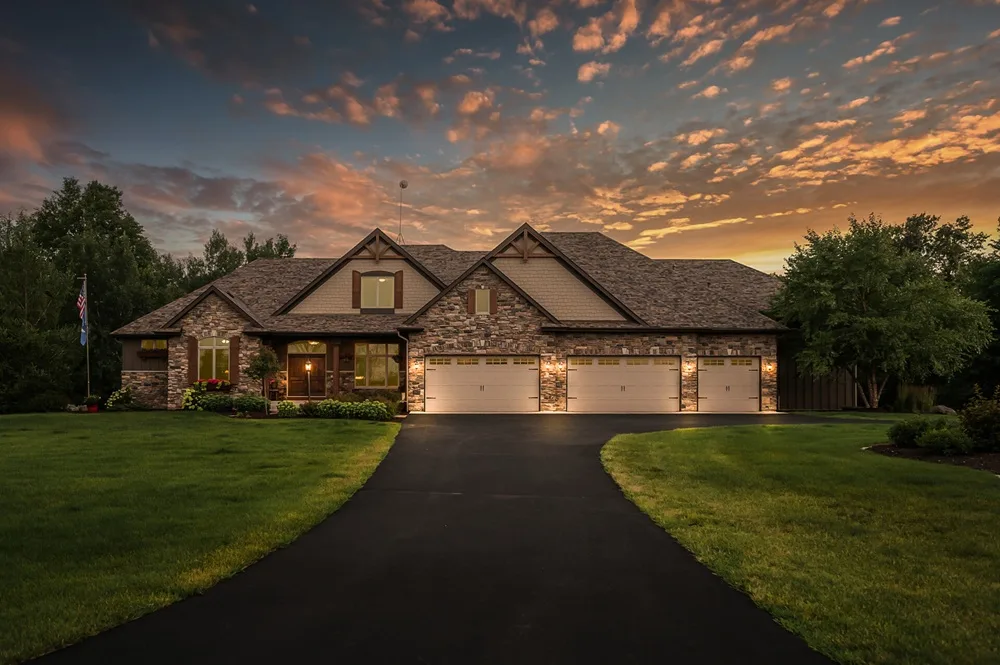
Luxury is the one segment where activity is not just steady, it is accelerating. Sales over $1 million rose 18.0 percent, by far the strongest growth of any price band in the state. That may seem counterintuitive in a higher-rate environment, but it tracks with what we are seeing in the field: a meaningful share of luxury buyers are paying cash or putting down large amounts, which makes them far less sensitive to mortgage rates than the rest of the market.
If you are shopping at this level, do not assume rising inventory automatically hands you leverage. Well-positioned luxury properties, particularly on the water or in established neighborhoods with genuine scarcity, are still drawing serious interest and can move quickly when priced right. Where buyers are gaining real ground is on properties that have been sitting, where sellers are increasingly open to concessions, extended timelines, or creative deal structures they would not have entertained two years ago.
Get pre-approved before you fall in love with anything. Rising inventory means more choices, but it also means the buyers who are fully ready to act are the ones who win the good ones.
Do not anchor your expectations to 2021. Days on market, negotiating power, and pricing dynamics have all shifted, and comparing today’s market to the frenzy of a few years ago will only lead to frustration or overpaying out of habit.
Think in neighborhoods, not just price brackets. Conditions vary block by block as much as they do by price point. Our Ultimate Guide to Twin Cities Neighborhoods for Homebuyers is a good place to start narrowing down where your budget and lifestyle actually intersect.
If you want a broader look at how we got here, our Mid-Year 2026 Housing Market Update covers the first half of the year in more depth, and our piece on What a Balanced Market Actually Means for Buyers and Sellers is a helpful primer if the terminology in this article is new to you.
That’s exactly where having a local expert can help. Whether you are looking under $400,000, somewhere in the middle, or shopping in the luxury market, the right strategy depends on more than just the headlines.
Tell us what you are looking for, where you are hoping to buy, and what matters most to you. We’ll help you make sense of the market and figure out your next best step, with no pressure to make a decision before you are ready.
Not quite. At 3.0 months of supply, the Twin Cities remains in seller’s market territory by traditional standards, though conditions have shifted meaningfully toward balance compared to recent years, especially in the $400,000 to $700,000 range.
Luxury buyers are less dependent on financing and more likely to pay cash or put down larger amounts, which insulates that segment from mortgage rate swings that affect the rest of the market.
Yes. The median sales price rose 3.3 percent year over year to $408,000 in July, though the pace of appreciation has slowed compared to the sharpest years of the pandemic-era market.
That depends on your personal timeline and finances, but waiting indefinitely carries its own cost, since rents have not fallen and competition for entry-level homes has remained steady. We are happy to walk through your specific numbers and help you decide what makes sense for your situation.
Every price point in this market is telling a slightly different story right now, and the only way to know what it means for your specific move is to look at your target neighborhoods and price range directly. We would love to help you make sense of where you fit into all of this. Reach out anytime.