
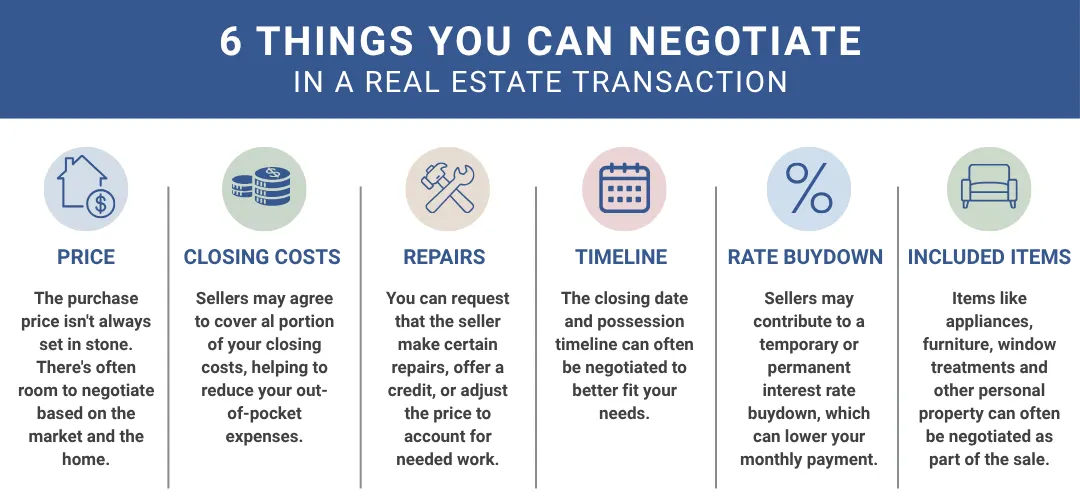
Buyers in today’s Twin Cities market can negotiate far more than just the sale price. Closing costs, repairs, closing timeline, mortgage rate buydowns, and included items are all realistically on the table. That’s a direct reversal from the past few years, when many local buyers had almost no room to ask for anything.
The reason is straightforward: sellers across the Twin Cities are adjusting to a market where buyers can’t stretch as far as they used to especially with rates holding around 7%, and that adjustment is opening up real negotiating room for anyone shopping right now.
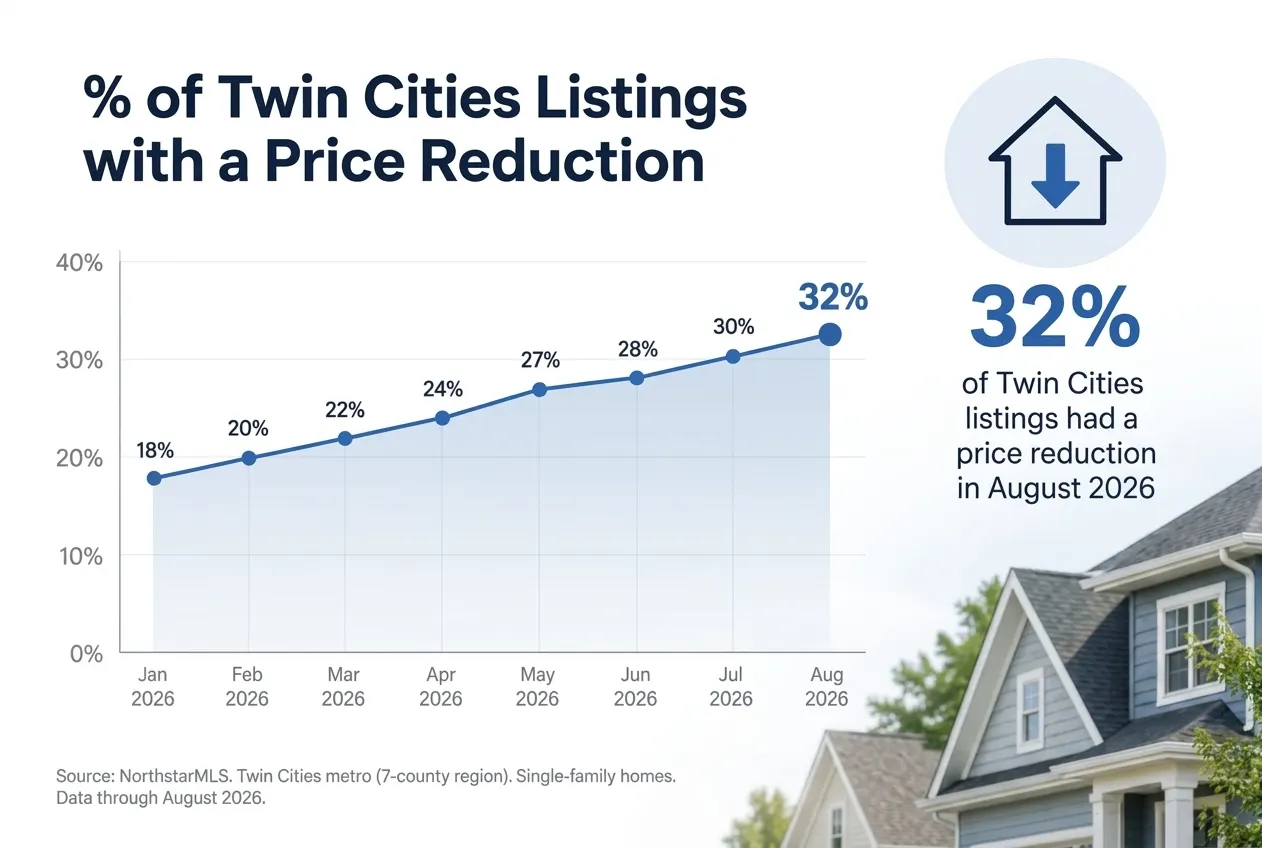
Yes. More than 40% of sellers nationally are currently cutting their list price, nearly matching the volume seen a year ago, and that same pattern is showing up locally as homes sit longer and sellers recalibrate their expectations.
That’s not a niche trend. That’s over 4 in 10 listings where the seller has already accepted that their original number was too high. As Danielle Hale, Chief Economist at Realtor.com, put it, sellers today are “adjusting and showing up rather than giving up,” pricing more realistically to the current market to help home sales actually close.
It’s worth being clear about what this isn’t: a price cut doesn’t mean the market is collapsing. It means sellers are being practical. Homes are still holding real value locally. Sellers are simply meeting buyers where they are instead of where the market used to be. We broke this down by price point specifically for our area in What Today’s Twin Cities Market Means for Buyers at Every Price Point, if you want the neighborhood-level detail.
Buyers have more leverage now because homes are sitting on the market longer and sellers are competing for fewer qualified buyers, instead of buyers competing against each other for scarce listings.
A year or two ago, the strategy that mattered most was knowing how to win a bidding war, and we covered that in detail in How to Win in Multiple Offers. That advice still applies to the hottest, well-priced listings (which are still selling in multiple offers!), but it’s no longer the default playbook for most Twin Cities buyers. In a lot of cases today, it’s sellers who are working to keep a buyer engaged, not the other way around. We talked through what that balance actually looks like locally in How to Tackle a Balanced Market.
Buyers can negotiate six main things in a purchase agreement: price, closing cost credits, repairs, the closing timeline, a mortgage rate buydown, and included items like appliances or a home warranty. Here’s how each one works.
Yes. Price is the most direct lever, and it’s realistically back on the table for homes that have been listed a while. With price cuts becoming common across the Twin Cities, buyers have room to open below asking, especially once an agent pulls the days-on-market and price-history data to show exactly how much room a seller likely has.
Yes. Sellers can agree to pay some or all of a buyer’s closing costs as part of the deal. This is a strong option if a buyer is cash-tight upfront but comfortable with the resulting monthly payment, since it keeps more money in the buyer’s pocket at the closing table which can often have more practically value for buyers versus lowering the purchase price itself.
Yes. Buyers are not required to accept a home “as-is” after inspection. A buyer can negotiate for the seller to complete repairs, provide a credit toward fixing issues, or adjust the price to reflect needed work, from an aging roof to an HVAC system nearing the end of its life.
Yes. And timing flexibility is one of the most overlooked bargaining chips available to buyers. A buyer who needs extra time to sell a current home or coordinate movers can negotiate a longer close, while sellers who need to move quickly may lower price or offer other concessions in exchange for a fast, clean close.
Yes. Some sellers, particularly builders and highly motivated sellers, will contribute toward a mortgage rate buydown that lowers a buyer’s interest rate and monthly payment, either temporarily or for the life of the loan. This can be worth more long-term than a small price reduction. Builders in particular have gotten creative here, which we cover in How to Navigate New Construction Homes in the Twin Cities, and our agent Anna Ryan used exactly this kind of leverage to win $10,000 off her new build. If you’re weighing a rate buydown now versus waiting for rates to drop on their own, it’s worth reading what waiting actually cost Twin Cities buyers last year before deciding.
Appliances, window treatments, patio furniture, and home warranties are all up for negotiation. If a seller won't move on price, ask what items they are willing to leave behind.
It means Twin Cities buyers who’ve been waiting on the sidelines have more room to act than they’ve had in years, provided they know where that room actually is street by street. Local negotiating power varies significantly by neighborhood, price point, and how long a specific home has sat on the market, which is exactly why hyper-local data matters more than national headlines here.
Buyers should approach negotiations by identifying which lever matters most to their situation (price, cash at closing, monthly payment, or timeline) and letting local data on that specific listing guide the ask, rather than using a one-size-fits-all offer strategy. Affordability still matters, and a buyer’s monthly payment is still the number that counts most, but assuming a home is out of reach without checking what’s negotiable often leaves real savings on the table.
Ready to explore buying? Let’s talk about what today’s market actually means for your budget, your timeline, and your negotiating power. Reach out to map out your next move!
Yes. With over 40% of sellers cutting their list price (and over 30% in the Twin Cities) and homes sitting on the market longer, sellers are showing more flexibility on price and terms than they have in recent years.
No, not always. Pricing strategy varies by home, location, and how long a listing has been on the market, which is why local market data and a read on seller motivation matter more than a blanket rule. Expert agents will always prepare a detailed Comparative Market Analysis (CMA) to help you understand the submarket the home of interest is in.
Closing cost credits and minor repair credits tend to be the easiest asks, since they don’t require the seller to lower their listed price on paper.
Not directly, but buyers can negotiate for the seller to contribute toward a rate buydown, which a lender then applies to reduce the buyer’s interest rate.
Source data: HousingWire and Realtor.com, as reported via Simplifying the Market, August 2026.