

Can an HOA foreclose on your home in Minnesota? Yes, and it can happen even when your mortgage is fully paid up. If you own, or plan to buy, a condo, townhome or home in a planned community, your HOA dues are more than a monthly bill. About 27% of Minnesotans live in an HOA, according to a February 2026 Department of Commerce report, so this affects a lot of households.
HOA foreclosures are rising across the country. Minnesota isn’t seeing the extremes of states like Florida, where condo owners face huge special assessments. But the same pressures are building here, and we want our clients to understand how it works before it ever becomes a problem.
Homeowners and associations are both feeling the squeeze right now.
Homeowners are stretched. Higher home prices and interest rates leave many owners with little cushion. A job change, a medical bill or a payment increase can tip a budget over, and HOA dues are often the first bill to slip.
Associations are stretched too. Every unpaid account cuts into the HOA’s operating budget and reserves. Insurance premiums and maintenance costs keep climbing. Boards that can’t absorb the shortfall are getting stricter about collections, and more of those cases end in foreclosure.
We expect this trend to continue in the current economy. If affordability is on your mind, see How to Afford a Home in the Twin Cities: 4 Ways to Work the Magic and Should You Wait for Mortgage Rates to Drop?
Under Minnesota law, your association automatically has a secured lien on your unit for unpaid dues. It doesn’t need to file anything new; the lien exists from the moment the HOA’s declaration was recorded. This comes from the Minnesota Common Interest Ownership Act (MCIOA), Minn. Stat. § 515B.3-116.
When there are several claims against a property, they’re paid in a set order:
Minnesota protects your mortgage lender, but that doesn’t stop your HOA from foreclosing on its own lien. Associations can use foreclosure by advertisement, the same out-of-court process lenders use. After the sheriff’s sale, you generally have six months to redeem (buy back) the property.
The homes most at risk are often the ones with the most to lose:
If the dues aren’t caught up, the HOA can end up with the home, sell it, collect what it’s owed and keep the difference. For an owner with real equity, that’s a devastating outcome from what may have started as a few missed payments.
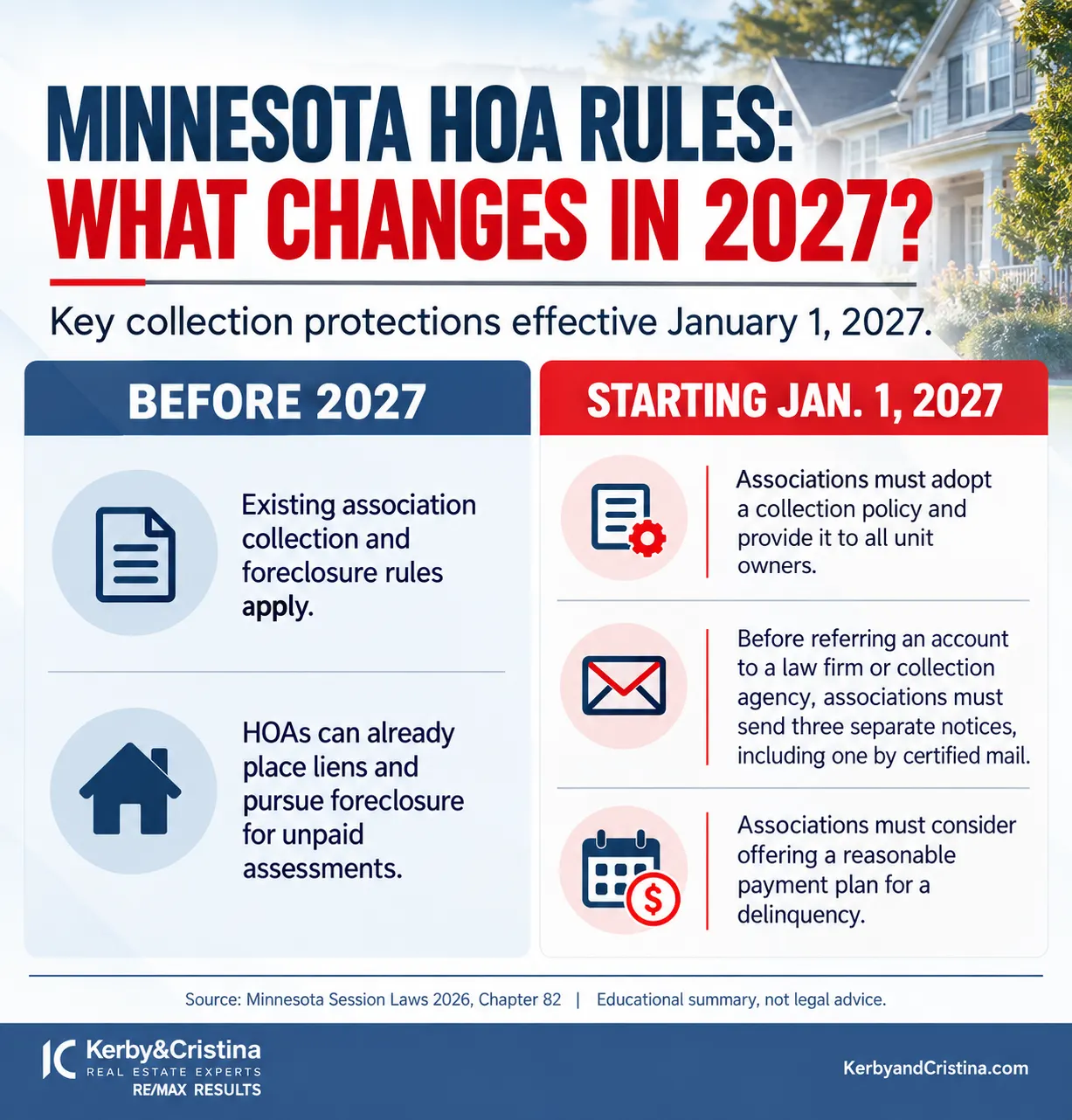
Minnesota’s 2026 HOA reform law, Laws 2026, Chapter 82 (S.F. 1750), takes effect January 1, 2027 and applies to every association, old or new. It adds real protections for owners, though foreclosure is still possible. Here’s what changes, per the Minnesota House Research summary:
The bottom line: the process will be slower and clearer, but a determined board can still foreclose. Staying current is still the best protection.
Before you commit to a condo, townhome or planned community, take a close look at the association, not just the home. Your agent can help you:
An association with lots of delinquent owners or thin reserves is more likely to raise dues, add special assessments and pursue collections aggressively. Starting in 2027, resale packets will include even more of this information, and we’ll walk you through it.
HOAs are especially common in new construction: more than 80% of new Minnesota homes are built in one, legislators heard this year. If you’re touring new builds, start with our guide to new construction in Plymouth, MN, or see how we help buyers on our Buy With The Experts page.
You’re not alone, and there’s no judgment here. The sooner you tell your agent, the more options you have. Be ready to share:
If a foreclosure is underway, time matters. Under MCIOA, the association must provide a payoff statement within 10 business days of a written request, so we’ll request one right away. From there, we can price and market your home to sell within the redemption period, and we’ll recommend bringing in a real estate attorney early. A timely sale can protect your equity instead of losing it to the HOA.
Well-priced HOA homes can still move fast: see how a Plymouth condo sold $26,000 over list price in one day. If the timeline is very tight, ask us about a cash offer. Our checklist on what to do before listing your home can help you get ready quickly.
The most important step is not to ignore it. A few missed payments can grow quickly once late fees and legal costs are added.
Whether you're buying your first condo, selling a townhome or worried about falling behind, we're here to help you understand your options and protect your investment. Our team stays on top of Minnesota's changing rules so you don't have to.
or call 763-634-0073 for a confidential conversation.
This article is for general information only and is not legal advice. HOA governing documents and individual situations vary. Please consult a Minnesota real estate attorney about your specific circumstances.
Late fees and fines can be added, and the unpaid amount becomes a lien on your home. If it stays unpaid, the association can foreclose. Starting in 2027, it must first send at least three notices and wait until amounts are more than three months overdue.
Yes. Under MCIOA, an HOA can foreclose its lien for unpaid dues by advertisement or through the courts, even if your mortgage is current.
Only partly. Your first mortgage keeps overall priority, but up to six months of regular dues survive a mortgage foreclosure. Late fees, fines and legal costs don’t get that priority.
Generally, you have six months from the sheriff’s sale to redeem the property.
Starting January 1, 2027, associations must follow a written collection policy with at least three notices, apply payments to dues first, consider payment plans, and wait until amounts are more than three months overdue before foreclosing.