
HOA foreclosures are on the rise, and Minnesota agents who understand how HOA liens work will protect their clients, and their deals, better than those who don’t.
Minnesota isn’t seeing the extremes of states like Florida, where condo owners are facing massive special assessments. But the same pressures are building here. Homeowners are stretched thin, associations are short on cash, and boards are getting more aggressive about collections. If you represent buyers or sellers in condos, townhomes, or any planned community, this belongs on your radar now.
HOA delinquencies are climbing because both sides of the equation are under strain.
Homeowners are living on the brink. Higher home prices and interest rates have squeezed affordability. Many owners have little cushion, so a job change, medical bill, or rate reset can push them into delinquency. HOA dues are often the first bill to slip.
HOAs are feeling it too. Every delinquent account hits the association’s operating budget and reserves. At the same time, insurance premiums and maintenance costs keep rising. Boards that can’t absorb the shortfall are taking a harder line on collections, and more of those cases end in foreclosure.
We expect this trend to continue in the current economic climate.
Affordability worries are showing up in client conversations too. For help framing them, see Does Real Estate Always Beat Inflation? How Great Agents Handle the Conversation in 2026.
In Minnesota, an HOA lien cannot take total priority over a first mortgage, but six months of regular assessments get special protection. This is often called a limited “super lien,” and it comes from the Minnesota Common Interest Ownership Act (MCIOA), Minn. Stat. § 515B.3-116.
Here is the order of priority on a typical HOA property:
One detail agents miss: the HOA lien is perfected when the declaration is recorded. The association doesn’t need to file anything new to have a secured lien against the unit.
Minnesota protects the first mortgage, but that does not stop an HOA from foreclosing its own lien, and many do. Under MCIOA, an association can foreclose by advertisement, the same out-of-court process lenders use. The owner then has a six-month redemption period after the sheriff’s sale.
Smart, aggressive boards look for two kinds of properties:
The result is pressure. Either the homeowner gets caught up, or the HOA ends up with the property, sells it, pays off the delinquent dues, and keeps the difference. For an owner with real equity, that is a devastating outcome over what may have started as a few months of missed dues.
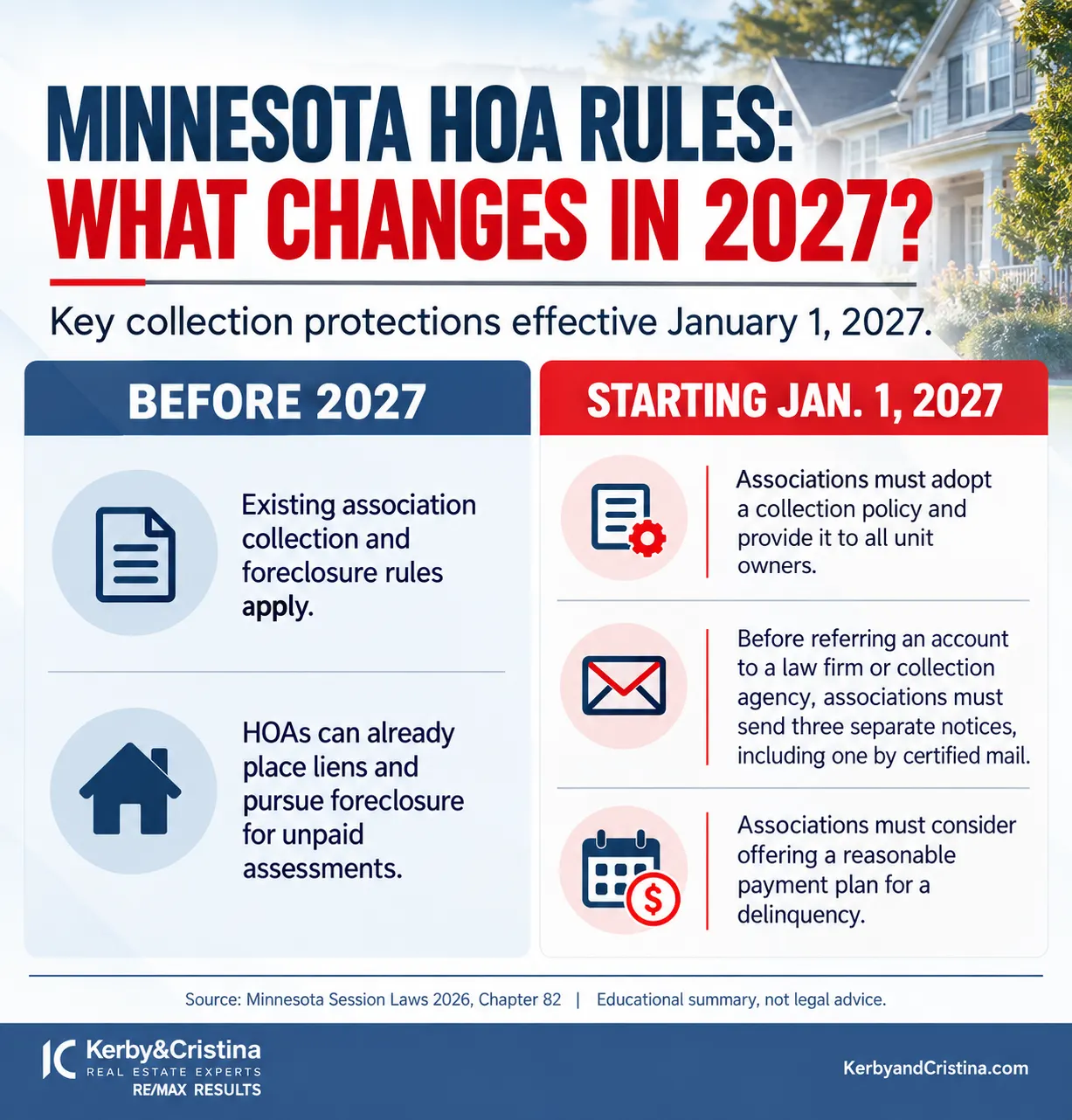
Minnesota’s 2026 HOA reform, Laws 2026, Chapter 82 (S.F. 1750), takes effect January 1, 2027 and applies to associations regardless of when they were created. It adds guardrails, but it does not take foreclosure off the table. Key changes for agents, per the House Research act summary:
The takeaway: the process will be slower and more transparent, but a determined board can still foreclose. The new disclosures also give buyer agents more to review, and more to explain.
Your clients need to understand that HOA dues are not just another monthly bill. They are a secured lien against the property, and the HOA can foreclose if they go unpaid.
Before your buyer commits, make sure they:
An association with heavy delinquencies or thin reserves is more likely to raise dues, levy special assessments, and pursue collections aggressively.
If a seller is behind on HOA dues, you need to know on day one, not at the closing table. Ask every HOA seller:
If a seller is in HOA foreclosure, time is of the essence. Request a payoff statement from the association right away; under MCIOA it must be provided within 10 business days of a written request. Price and market the home to move within the redemption timeline, and loop in a real estate attorney early. A fast sale can preserve the seller’s equity instead of handing it to the HOA.
These are hard conversations. A seller behind on dues is often embarrassed or scared, so how you ask matters as much as what you ask. Build these questions into your listing appointment using our Connect, Control, Close framework. When the news is bad, our guides on leading through difficult listings and keeping your care in tough situations can help you keep the conversation factual and compassionate.
HOA foreclosures are one more sign that this chapter of real estate is harder, and that the agents who stay informed will win. When the rules change, our agents hear about it first, with practical guidance they can use with clients the same day. See how our systems support every agent from first conversation to closing table.
If you want a team that invests in your knowledge and your business, let's talk about joining Kerby & Cristina Real Estate Experts.
Schedule a Conversation!Yes. Under MCIOA, an HOA can foreclose its assessment lien by advertisement or by court action, even if the owner’s mortgage is current.
Only partly. The first mortgage keeps overall priority, but up to six months of regular assessments survive a first-mortgage foreclosure. Late fees, fines, and legal costs do not get that priority.
Generally six months from the date of the sheriff’s sale.
Starting January 1, 2027, associations must follow a written collection policy with at least three notices, apply payments to dues first, consider payment plans, and wait until amounts are more than three months overdue before foreclosing.