

If you have been scrolling through the news lately, you have probably seen headlines like “Foreclosures Are On the Rise” and felt a knot in your stomach. We get it. The word “foreclosure” is loaded, and for anyone who lived through 2008, it can send you straight back to some scary memories. Kerby started in real estate that year and spent hours negotiating short sales, and Cristina joined shortly after in a market that was 60% distressed properties. But here is what we want you to know as your trusted Minneapolis real estate advisors: the headlines are telling you part of the story, but not the whole story. And the whole story is actually much more reassuring.
Foreclosure filings are up 26% from a year ago, but this reflects post-pandemic normalization rather than a 2008-style housing crash. The average homeowner today has roughly $295,000 in home equity, and only 0.3% of homes are currently in the foreclosure process. Serious delinquencies sit around 1% — compared to 9% during the housing crash. The Minneapolis market is not in crisis; it is returning to normal.
Yes, the numbers are going up. Foreclosure filings are up 26% from a year ago, according to ATTOM, and they have been rising for 5 straight quarters. On the surface, that sounds alarming. But context is everything.
The extremely low foreclosure numbers from 2020 and 2021 do not represent what is “normal.” That period reflects when the government put a moratorium on foreclosures to help homeowners get through the pandemic. So when filings started climbing again after those protections lifted, of course they looked dramatic compared to an artificially suppressed baseline. The recent increase is more of a normalization story than a warning sign of a 2008-style collapse.
Put simply: we are not in a crisis. We are returning to a normal market.
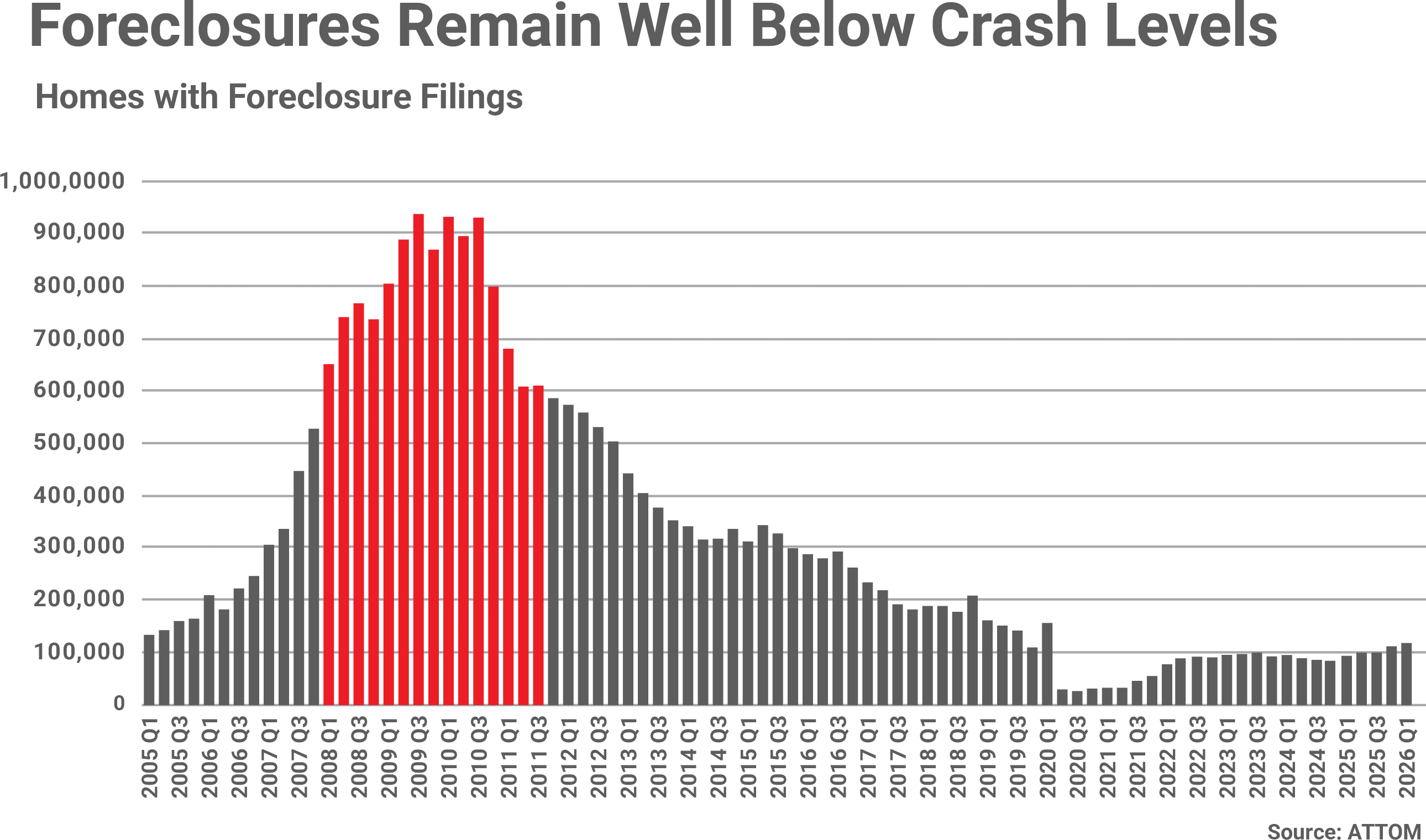
The fear driving most of those scary headlines is the fear of a repeat of the last housing crash. That is understandable. But the conditions that caused 2008 simply do not exist today.
The single biggest difference? Equity.
The average homeowner today is sitting on roughly $295,000 in home equity, according to Cotality. Back in 2008, many people owed more than their homes were worth. Selling was not an option, and foreclosure was often the only door available.
That is a fundamentally different situation. Today, if you have enough equity to cover what you owe and the cost of selling, you could sell your home, pay off your debt, protect your credit, and potentially walk away with money in your pocket. That kind of financial cushion means most homeowners who do fall behind have real options. Foreclosure does not have to be the outcome.
Total borrower equity remains around $17 trillion nationally. That matters because equity gives many homeowners options they simply did not have during the last crash.
Most Filings Are Not Even Becoming Foreclosures

Here is another layer the headlines skip right over. Not every missed payment leads to foreclosure. Many homeowners who fall behind are able to work with their lenders to find solutions, because lenders want to avoid foreclosure just as much as homeowners do. Currently, only about 0.3% of homes are in the foreclosure process.
That is not a wave. That is barely a ripple.
One of the clearest ways to measure real housing stress is through serious delinquencies, homeowners who are more than 90 days behind on their mortgage. Right now, that number is around 1%, roughly 1 in 100 homeowners. During the housing crash, it was closer to 9%, or about 1 in 11. That difference is enormous, and it is the number you should actually be paying attention to.
If you are a homeowner in the Twin Cities who has been worried about the value of your investment, this data should offer real reassurance. The market is not crumbling. Equity levels remain strong, and that protects both individual homeowners and the broader housing market.
If you are a buyer hoping that a foreclosure wave will bring prices crashing down and open up affordable deals, the data does not support that scenario. Nothing in the current data points to a big wave of distressed sales that will crash the market.
And if you are someone who is personally feeling financial pressure right now and worried about your mortgage, please reach out to us before making any decisions. With the equity most homeowners carry today, you may have far more options than you realize.
Rising foreclosure numbers sound frightening in a headline, but the full picture tells a very different story. Foreclosure headlines can sound alarming, but the data points to a market that is simply working through some delayed stress and moving closer to its pre-pandemic rhythm.
When you hear something in the news that makes you nervous about housing, that is exactly when you should call a local expert who knows the numbers, knows the Minneapolis market, and knows how to cut through the noise. That is what we are here for.
Have questions about what is happening in the market and what it means for you? We would love to chat. Reach out to our team of experts anytime at kerbyandcristina.com and let’s talk through it together.