
Whether you already own a home or hope to buy one, you probably care about where prices are headed. Lately, the headlines aren’t making that easy. One says prices are falling. The next says they’re still climbing.
So which one is right? It comes down to where you live. In the Twin Cities, the answer is clear: home prices are still rising, just at a slower pace. The metro median sales price was $395,000 in September 2026, up 1.3% from a year earlier, according to Minneapolis Area REALTORS®.
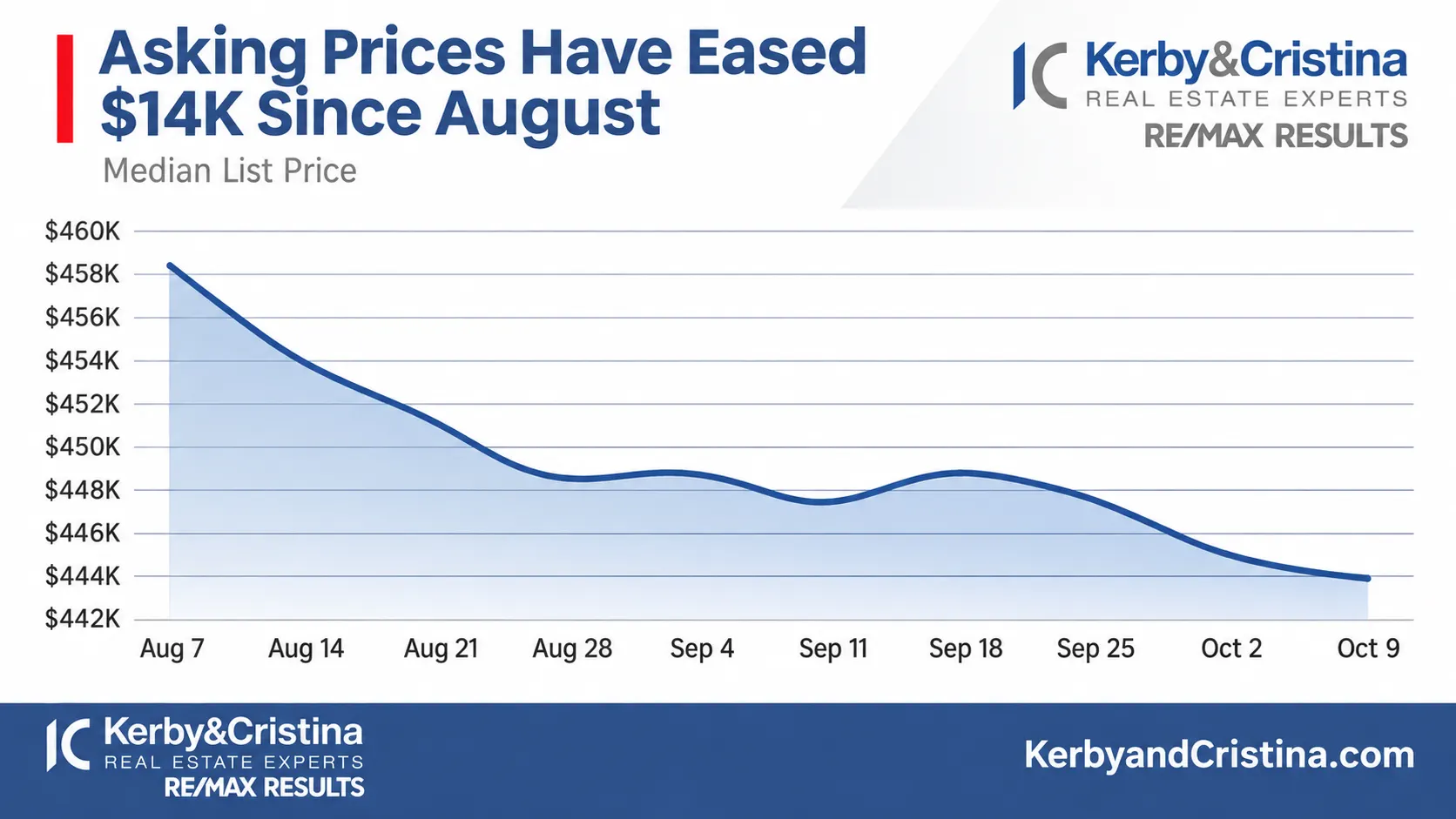
Many national headlines are based on asking prices. According to HousingWire Data, the national median asking price dropped from about $449,000 in early August to $435,000 two months later. That’s a dip of roughly 3%, and much of it is normal for this time of year. Fewer buyers shop in the fall, and sellers who want to move before the holidays tend to price a bit more competitively.
That number is a national list price. It blends hundreds of very different markets, and it shows what sellers are asking, not what buyers actually pay.
Source: Keeping Current Matters | www.keepingcurrentmatters.com
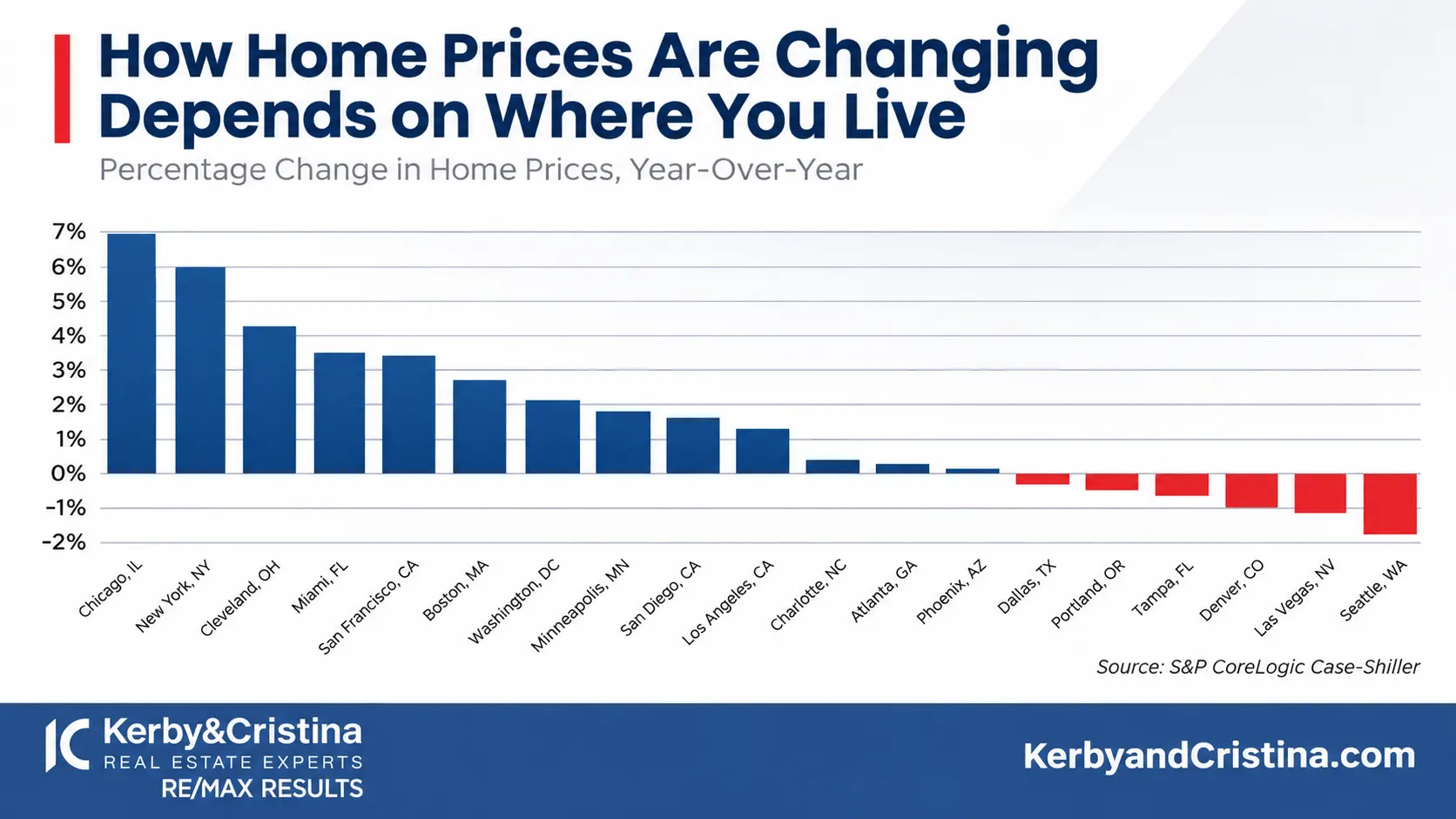
Realtor.com notes that local trends can “diverge sharply from national averages,” especially when you look at price range and property type. Even in the major metros where prices have dipped, the declines are 2% or less. Other markets are moving the opposite way, with New York prices up almost 6%.
Source: Keeping Current Matters | www.keepingcurrentmatters.com
That gap changes your game plan. A seller in a rising market may not need to cut their price. A buyer in a softer market may have more room to negotiate.
Here’s the latest from the Minneapolis Area REALTORS® Weekly Market Activity Report:
Look at how many different headlines you could write from that one report. “Twin Cities Pending Sales Drop 19%” and “Twin Cities Home Prices Rise Again” would both be accurate.
City-level data from Minnesota Realtors for September 2026 shows the same split:
That’s up, flat, down, and down, all in the same month. Each one is accurate, and none of them tells you what your house is worth.
The Twin Cities median peaked at $410,000 in June 2026 and eased to $395,000 by September. That isn’t a crash. It’s the calendar. Last year, prices slid from $390,000 in October 2025 to $375,000 in January 2026, then climbed back to that $410,000 high by June.
The same thing happened with one-month dips. In April 2026, the metro median fell 2.0% year over year, which drew plenty of attention. By May, it was back up 1.2%.
Price range, property type, and even your specific block all shape value. Single-family homes and townhomes, for example, face very different levels of competition in Minnesota. That’s why we price homes using recent nearby sales, not metro averages, as we explain in how long it takes to sell a house in Minneapolis.
With inventory up 13.2% and homes averaging 49 days on market, buyers have more options than they did a year ago. Well-priced homes are still selling, but overpricing costs more now, especially heading into winter. See why some Minnesota homes sell fast while others sit.
More choices and more room to negotiate are real advantages right now. Affordability is still the challenge. The 30-year fixed mortgage rate averaged 7.32% as of October 22, according to Freddie Mac. That’s down from 7.40% the week before but up from 6.19% a year ago. Our guide to navigating a balanced market explains how to make the most of today’s conditions.
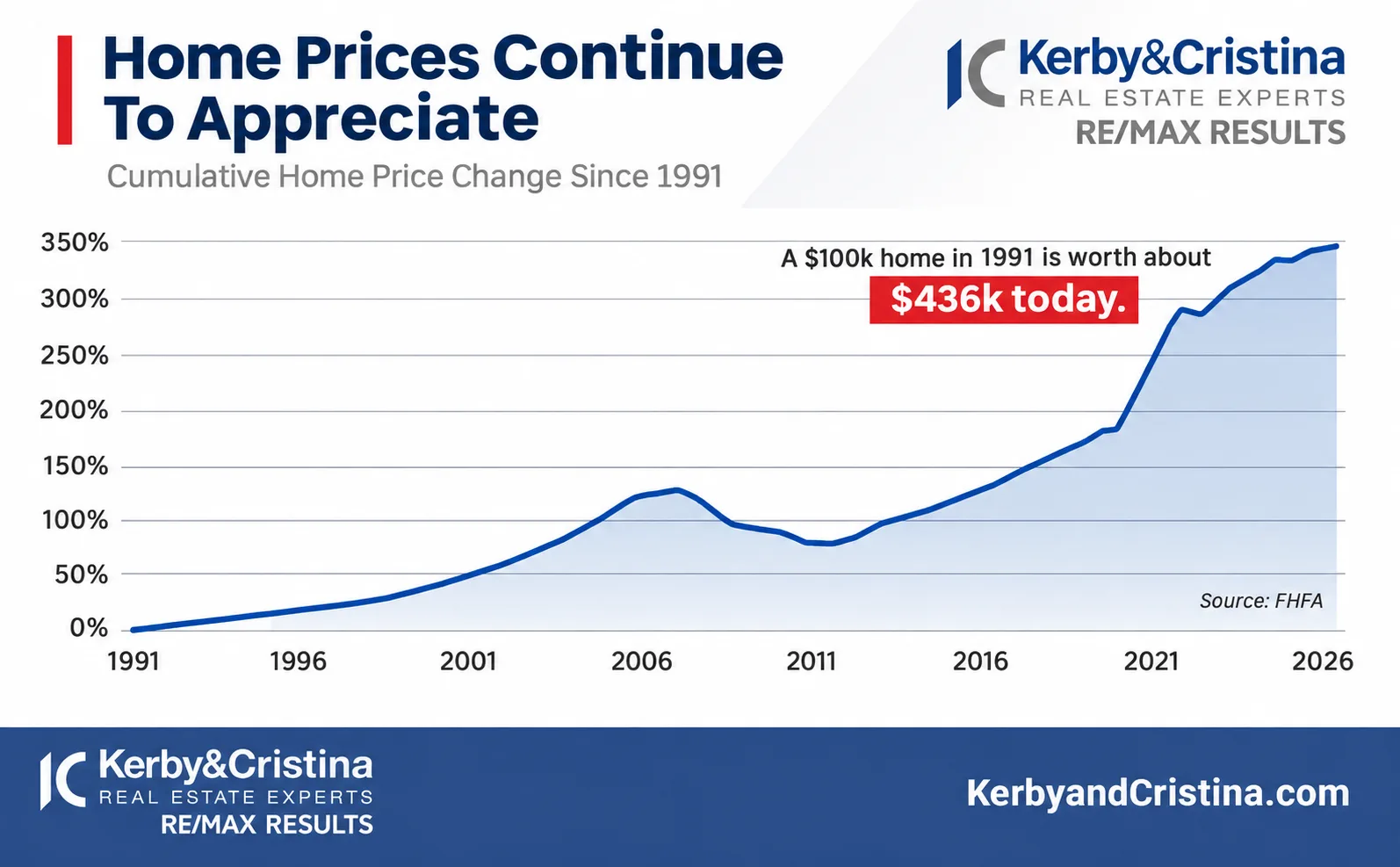
Short-term dips grab headlines, but the long view tells a different story. A $100,000 home bought in 1991 would be worth about $436,000 today, even after the 2008 crash. Closer to home, the Twin Cities September median has risen from $380,000 in 2024 to $395,000 in 2026.
Source: Keeping Current Matters | www.keepingcurrentmatters.com
National headlines can’t tell you what your home is worth or how much room you have to negotiate. Local data can. Kerby and Cristina Real Estate Experts will show you how prices are moving in your neighborhood, so you can set your price or make your offer with confidence. For a free, personalized home value review:
Get an Expert's Evaluation of Your House →No. Twin Cities home prices are still rising, just at a slower pace. The metro median sales price was $395,000 in September 2026, up 1.3% from a year earlier, according to Minneapolis Area REALTORS®. Prices dipped from their June peak, but that’s a normal seasonal pattern, not a decline in value.Summit Hill and Cathedral Hill are the best-known historic neighborhoods in St. Paul MN, both anchored by Summit Avenue. Summit Avenue holds the longest preserved stretch of Victorian-era homes in the country.
Headlines often measure different things. Some track national averages that blend hundreds of markets. Some report asking prices, not actual sale prices. Others focus on activity, like pending sales, instead of price. In late October 2026, Twin Cities pending sales were down 19.2% for the week while prices were up 1.3% for the year. Both headlines are accurate.
Fewer buyers shop in the fall and winter, so sellers price more competitively. This happens every year. The Twin Cities median fell from $390,000 in October 2025 to $375,000 in January 2026. Then it climbed to $410,000 by June 2026. The 2026 fall dip from $410,000 to $395,000 follows the same pattern.
It depends on the city. In September 2026, the Minneapolis median sales price was $350,750, up 0.2% from a year earlier. St. Paul’s median was $299,950, down 1.2%, according to Minnesota Realtors. Prices can vary even more by neighborhood, price range, and home type, which is why local data matters more than metro averages.
The Twin Cities is moving toward a balanced market but still leans slightly toward sellers. In September 2026 there were 3.3 months of supply, up 13.8% from last year. A balanced market is typically 5 to 6 months. Homes averaged 49 days on market, and sellers received 97.7% of their original list price on average.
Asking price, or list price, is what a seller hopes to get when a home goes on the market. Sale price is what a buyer actually pays at closing. National headlines often report asking prices, which can drop in the fall even while sale prices hold steady. In the Twin Cities, sellers received 97.7% of their original list price in September 2026.
The most accurate way is a comparative market analysis based on recent sales near your home, not national or metro averages. Price range, property type, condition, and location all affect value. Kerby and Cristina Real Estate Experts offer a free, personalized home value review using current Twin Cities market data.